
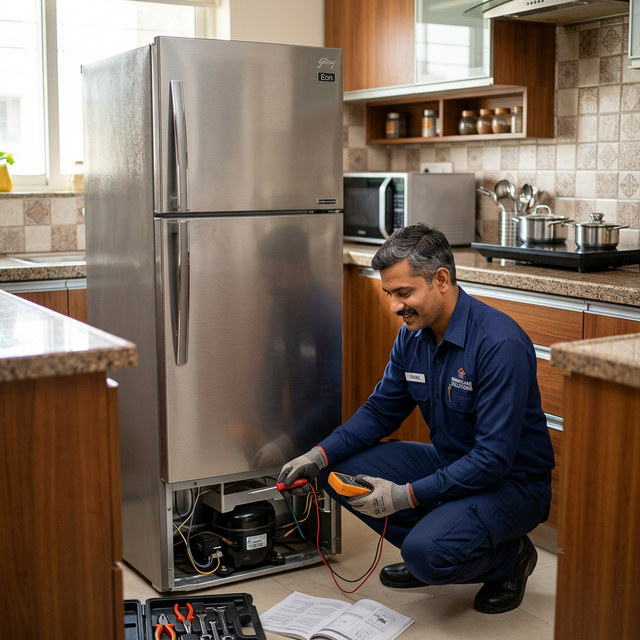
The compressor is the heart of your refrigerator. It circulates refrigerant through the system, maintaining the cold temperatures that keep your food fresh. When the compressor fails, your refrigerator stops working entirely — and replacement can cost nearly as much as a new unit. At RepairCure, our technicians have diagnosed hundreds of compressor issues, and the most common cause is entirely preventable: poor maintenance habits.
The good news is that with a few simple habits, you can easily add 5–8 years to your compressor's life and avoid costly emergency repairs. Here's what our experts recommend.
1. Keep the Condenser Coils Clean
The condenser coils release heat from the refrigerant. If they're clogged with dust and pet hair, the compressor has to work harder and longer to cool the interior. This extra strain is the single biggest cause of premature compressor failure. Clean the coils at the back or bottom of your fridge every 6 months using a coil cleaning brush or the brush attachment on your vacuum.
2. Maintain Proper Clearance Around the Unit
Your refrigerator needs air circulation to dissipate heat effectively. Many households push the fridge flush against the wall or tuck it into a tight cabinet with no room to breathe. Ensure at least 5–8 cm of clearance on the back and sides. This simple step dramatically reduces the workload on the compressor and extends its lifespan .
3. Don't Overstock or Leave the Door Open
Every time warm air enters the fridge, the compressor kicks in to bring the temperature back down. Overloading the fridge blocks airflow internally, making it harder to cool evenly and forcing the compressor to run in longer cycles. Similarly, leaving the door open while deciding what to eat is a silent compressor killer. Be decisive and close the door promptly.
4. Set the Right Temperature
Running your refrigerator at unnecessarily low temperatures forces the compressor to work harder than needed. The ideal setting is 3–4°C (37–40°F) for the fridge compartment and -18°C (0°F) for the freezer. Use a thermometer to verify your settings rather than relying on the dial markings, which can be inaccurate over time.
5. Check and Replace Door Seals Regularly
Worn or cracked door gaskets allow cold air to leak out and warm air to seep in continuously. Your compressor then has to keep compensating. Do the "paper test": close the door on a piece of paper — if you can pull it out easily, the seal is weak and needs replacing. A new gasket typically costs ₹500–₹1,200 and can save you thousands in compressor repairs.
6. Schedule Annual Professional Servicing
Just like a car needs regular oil changes, your refrigerator benefits from annual professional servicing. A RepairCure technician will check refrigerant levels, inspect electrical connections, clean internal components, and catch minor issues before they become compressor-level problems. Our preventive service visits start at just ₹649 and are among the highest-value investments you can make for your kitchen appliances.
Is Your Refrigerator Making Strange Noises?
Clicking, humming, or loud startup sounds are early compressor warning signs. Our technicians can diagnose and fix the issue before it becomes a full replacement.
Book Fridge Service Now